

If you like birds and want to see more birds and a greater variety of birds in your yard, this page is for you! I will explain how you can create a multi-layer landscape of plants to do just that, and I will present my own yard as an example to show what is possible.
What is a birdscape?
A birdscape is a landscape that mirrors the layers of plants in a forest and, as a result, attracts and supports a wide variety of bird species. Our yards are too small to host a full blown forest. But we can create a mini forest or woodland by adding plants to our yards that represent the layers of a forest.
Doing so provides habitat, food, and nest sites for a wide range of bird species. And it provides us with the joy of observing birds, including those with striking colors and lovely songs, right in our own yards!
What are the layers of a forest?
Starting at the top are the canopy trees—the tallest and largest trees. Next are the subcanopy trees. These smaller trees evolved to thrive in the shade below the canopy trees. Next are tall shrubs followed by low shrubs. At the ground level are herbaceous plants and woody saplings. Lastly is the leaf litter covering the soil.
The following image. illustrates the layers in the type of forest common to our area and provides examples of woody species typical of each layer.
What are some of the bird species that inhabit the various forest layers?
Some birds are generalists and may be present at times in any of the various layers. But many species prefer to inhabit and forage for food in one or a few specific specific layers. So more forest layers means more species can be present.
Think of the forest layers as floors in a high rise apartment building. Some species like the penthouse (the view is great!). Some like the middle floors or the lower levels closer to the ground. Some like to stay at or close to the ground (no stairs or elevators required!). The following image includes examples of birds that inhabit various forest layers.


What was my experience in creating my backyard birdscape?
I live in the Cape and I began creating a birdscape in my backyard beginning in 2008. My backyard originally consisted of lawn grass overshadowed by four large, towering southern red oak trees. It was a poor location for growing grass because of the tree shade and the lawn showed it. That’s because lawn grass does not tolerate shade. It needs sun to grow well.
It was a regular chore to keep the grass free of leaves and sticks that continually fell from the trees. I grew tired of it. Finally it dawned on me that the trees, in a way, were telling me not to fight nature and let the backyard be a little woodlot. I listened!
The first step was to kill all of the grass by smothering it with the copious leaves donated by the trees (thank you trees!). It worked great and required much less effort than trying to remove the grass by digging or tilling the ground. Plus I did not want to use herbicides.
Over time I planted various woody plants and herbaceous plants native to our forests and suited to my yard’s sandy soil, which dries out fairly quickly. For the subcanopy, the small trees included redbuds, dogwoods, serviceberry, and hollies. They were complemented by native tall and low shrubs, including showy azaleas and viburnums. Native wildflowers and ferns were planted for the ground layer. Leaves and sticks from the trees are allowed to fall where they may and stay there to build the leaf litter layer on the ground. By now the plantings have become well established and mature.
Being experienced at identifying bird species by sight and song I recorded bird species seen or heard from my yard over the years. The number of species observed since 1994 to date from my small yard of less than a quarter acre totals a surprising 76 species! Most of the recorded species were seen or heard in the backyard. Some birds were recorded in the front yard and as flying overhead or heard or seen on adjoining yards.
My personal favorites to see are the warblers. These lively small birds bring the bright colors and patterns of the tropics to us as they pass through on their migrations from Central and South America to points north of us. The following image lists the species recorded from 1994 to date:

Can creating a birdscape help birds?
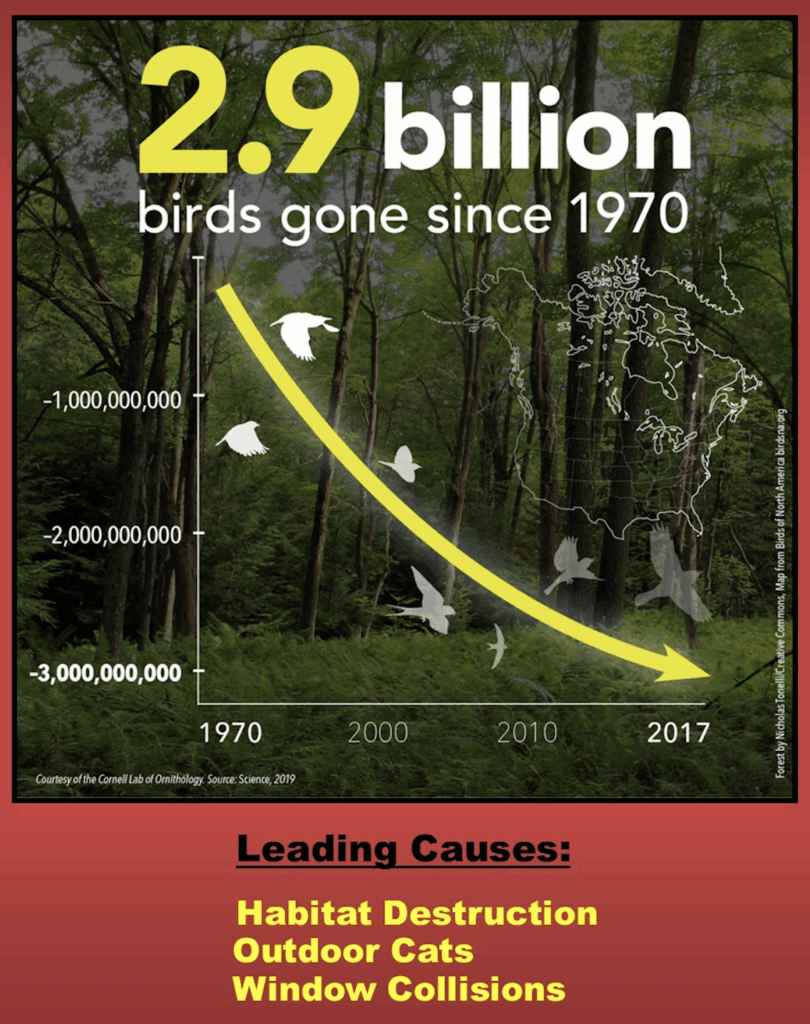
It’s very sad to say but birds are in trouble. Their numbers have been declining for years. Some species that I used to see regularly I only see occasionally or rarely now. Here are the staggering losses and the main causes.
"A staggering loss that suggests the very fabric of North America’s ecosystem is unraveling."
Cornell Lab director John Fitzpatrick and study coauthor Peter Marra
From the article: "Common birds—the species that many people see every day—have suffered the greatest losses, according to the study. More than 90% of the losses (more than 2.5 billion birds) come from just 12 families including the sparrows, blackbirds, warblers, and finches."
Besides helping birds are there benefits for us too?

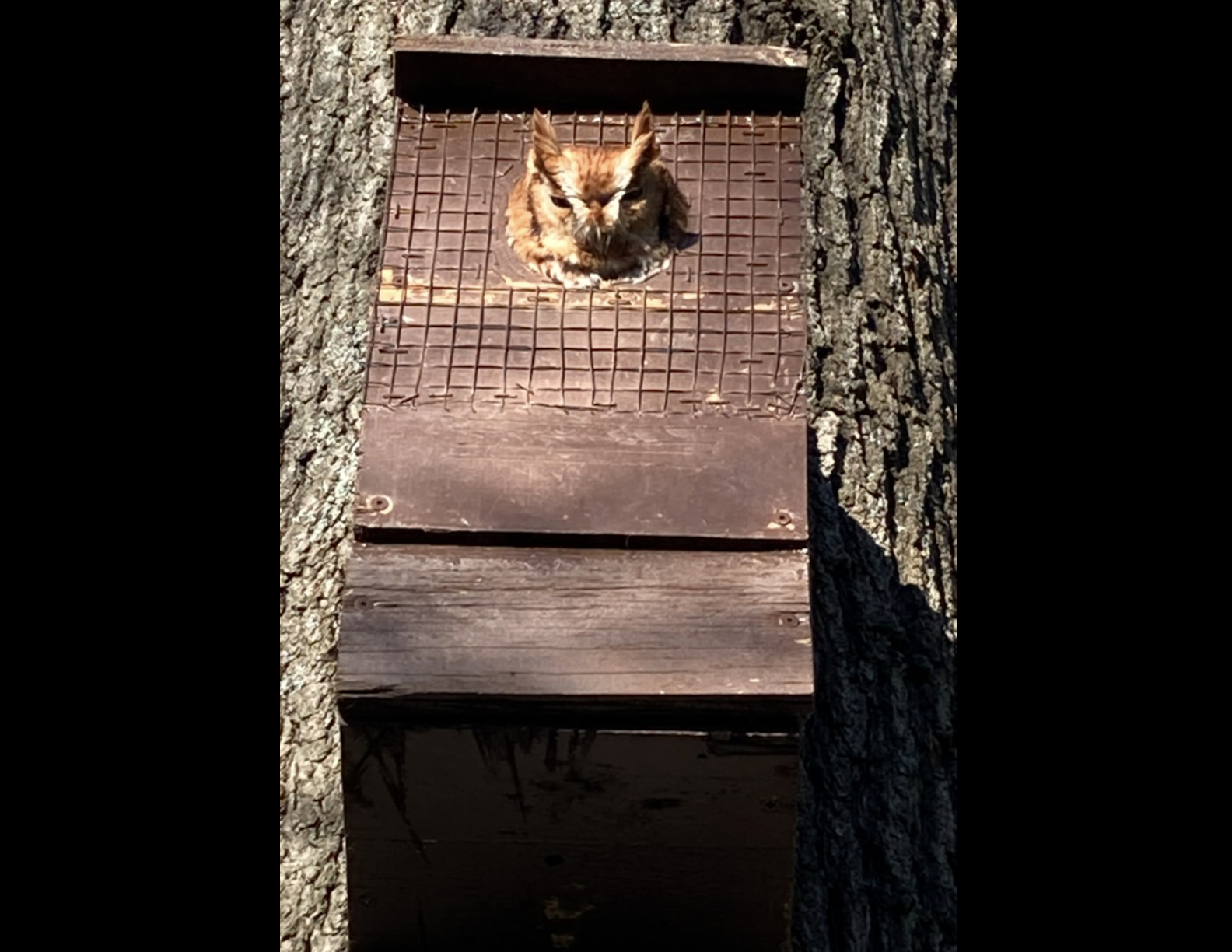
"If this screech owl could talk it would say: 'Creating a birdscape is a wise thing to do!"
What are some things to think about when creating a birdscape?
What plants can I choose from and where can I get them?
Guides are available to help you choose plants. The guides provide information that may include plant name paired with its height, preferred soil conditions, shade tolerance, fruit or nut bearing, and aeshetic attributes such as flowers and fall color.
Here’s two guides relevant to creating a birdscape with plants suited to our area:
Landscaping With Native Plants by the Maryland Native Plant Society.
Native Plant Center by the Alliance for the Chesapeake Bay.
And here are two lists on where you can get native plants:
Native Plant Nurseries and Vendors by the Maryland Native Plant Society.
Native Plant Nurseries by the Maryland Department of Natural Resources