

Order Spring Ephemerals – CCC First Flowers!

Order Spring Ephemerals – CCC First Flowers!
2. Uvularia grandiflora aka Large-flowered Bellwort – One of the first woodland flowers to emerge in spring, Bellwort is a long-lived perennial of the lily family. Distinctive, drooping yellow flowers and leaves are produced on attractive vase-shaped clumps, 12 – 20 inches l. Dry-medium soil. Partial to full shade.
3. Thalictrum thalictroides aka Rue-anemone – A native woodland wildflower that grows up to 9″ high and features white flowers with 5-10 petal-like sepals (usually 5) and numerous greenish-yellow stamens. Flowers appear in loose clusters above whorls of three-lobed leaves, but each flower has its own stem. Flowers infrequently have a pink tinge. A long-blooming spring flower with a delicate, dainty appearance. Typically grows in the wild on wooded slopes and ridges. Plant becomes dormant in summer. Dry to medium soil. Part shade.
1. Spigelia marilandica, commonly called Indian pink, is a clump-forming, native perennial which occurs in moist woods and streambanks in the far southeastern part of the State. Features one-sided cymes of upward facing, trumpet-shaped, red flowers (to 2″ long) atop stiff stems growing to 18″ tall. Each flower is yellow inside and flares at the top to form five pointed lobes (a yellow star). Flowers bloom in June. Glossy green, ovate to lance-shaped leaves (to 4″ long). Highly attractive to hummingbirds, and makes an excellent cut flower for fresh arrangements. medium moisture. Part to full
Shade.
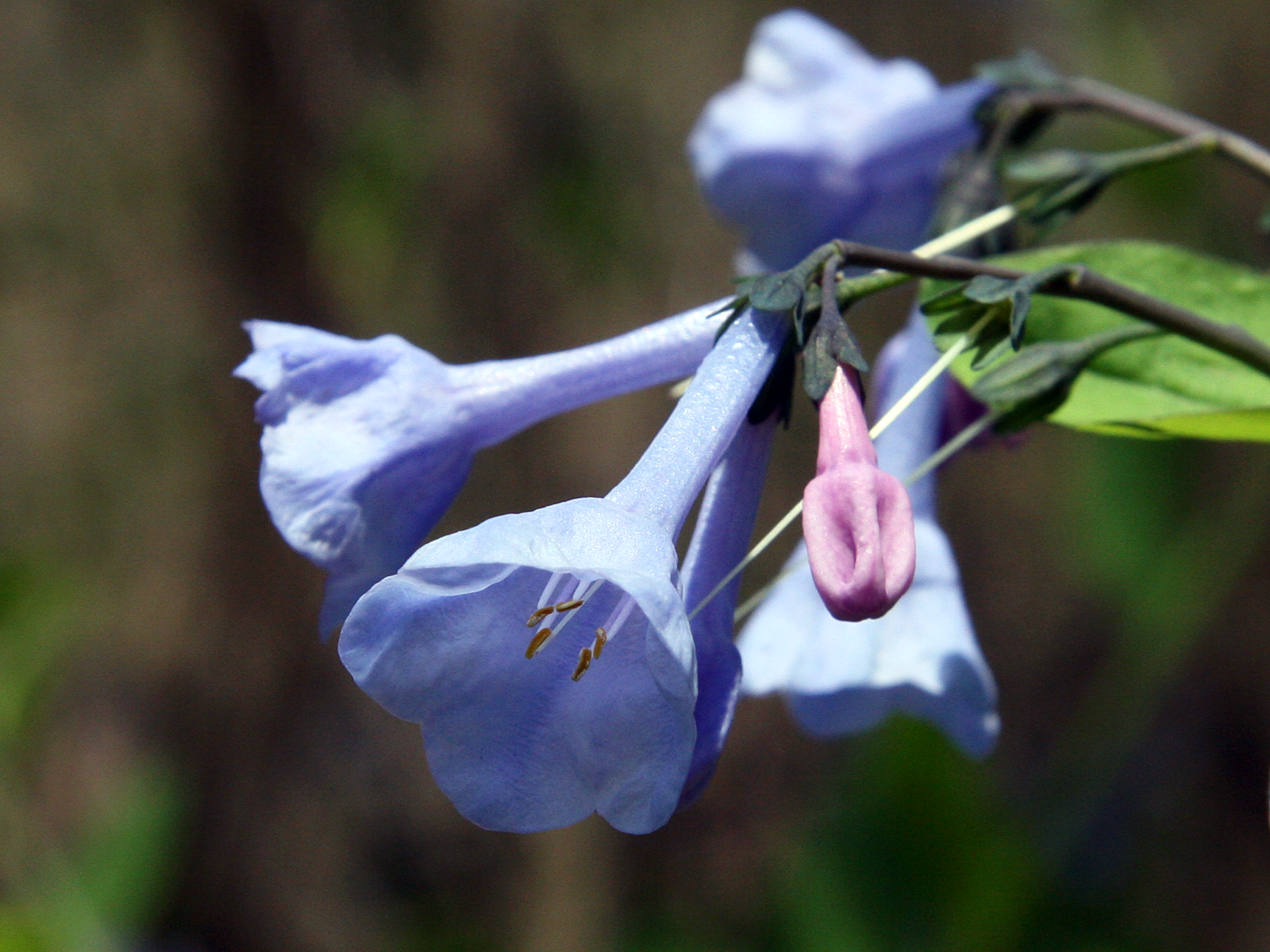
2. Mertensia virginica, commonly called Virginia bluebells, is a native wildflower that occurs statewide in moist, rich woods and river floodplains. An erect, clump-forming perennial which grows 1-2′ tall and features loose, terminal clusters of pendulous, trumpet-shaped, blue flowers (to 1″ long) which bloom in early spring. Flower buds are pink and flowers emerge with a pinkish cast before turning blue. Smooth, oval, bluish green leaves (to 4″ long). Foliage dies to the ground by mid-summer as the plant goes dormant. medium moisture. Part to full Shade.